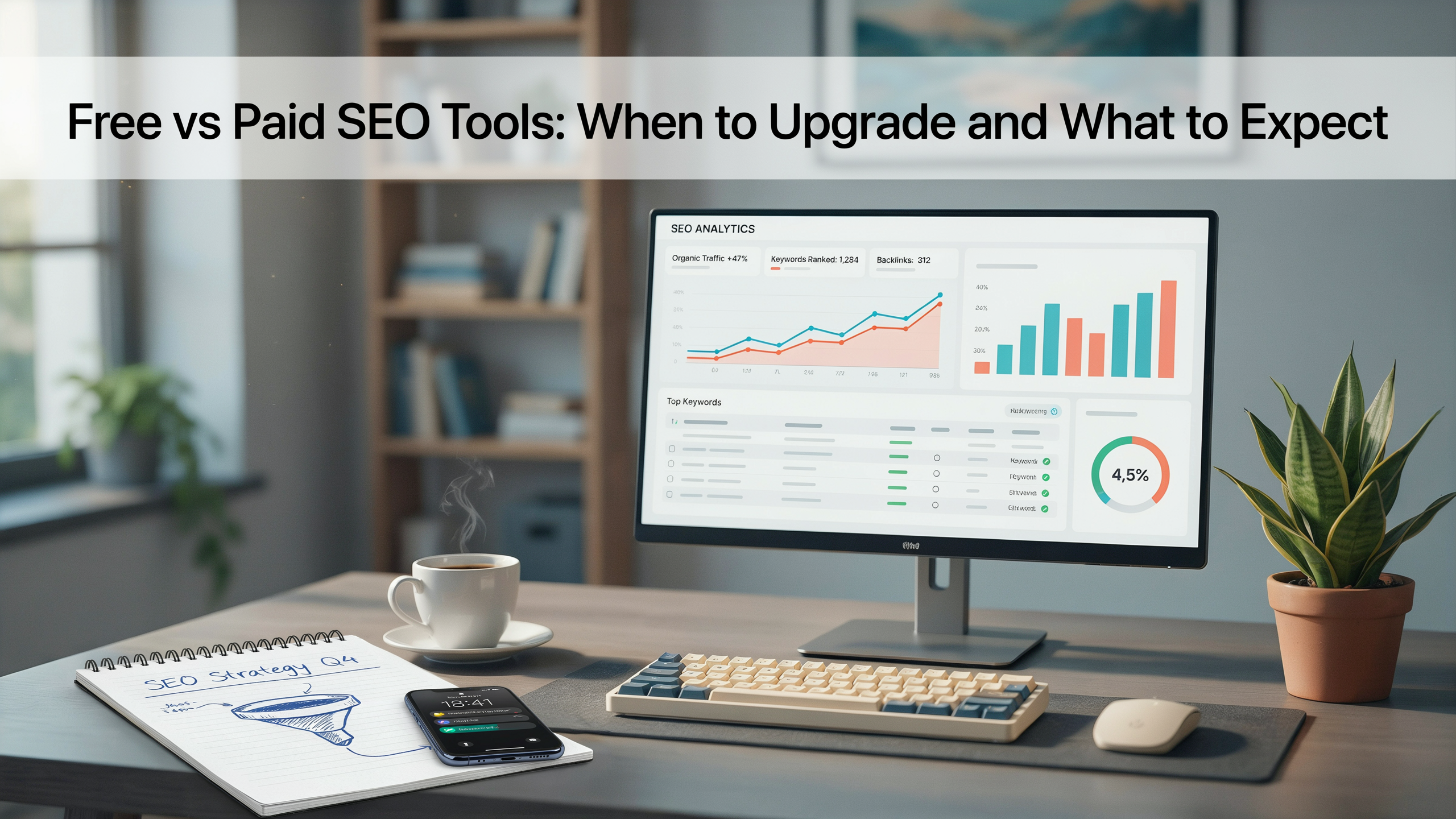
The debate over free vs paid seo tools is one every website owner and digital marketer eventually faces. Free tools can handle basic audits and keyword research. But they often stop short of the depth needed for competitive analysis, rank tracking, or technical SEO at scale. Paid software fills those gaps with richer data, automation, and support. Yet the cost can be a barrier if you're not sure what you're buying. This article breaks down the real differences between free and paid options. It shows where free tools fall short. And it helps you decide when an upgrade makes financial sense. By the end, you'll have a clear framework for building an SEO toolkit that matches your goals and budget.
Key Takeaways
- Free SEO tools provide essential data for on-page optimization and basic audits, but they come with significant limitations in data depth, freshness, and competitive analysis.
- Paid SEO software benefits include advanced features like comprehensive backlink analysis, rank tracking across thousands of keywords, and API access for custom reporting.
- SEO tool pricing varies widely, from $30 to over $500 per month, and the right investment depends on your site's scale, competition, and growth goals.
- A strategic approach combines free tools for foundational tasks with paid tools for high-impact activities, ensuring you maximize ROI without overspending.
- Measuring the ROI of your SEO tool investment requires tracking organic traffic growth, keyword ranking improvements, and conversion metrics over time.
What Free SEO Tools Can (and Can't) Do
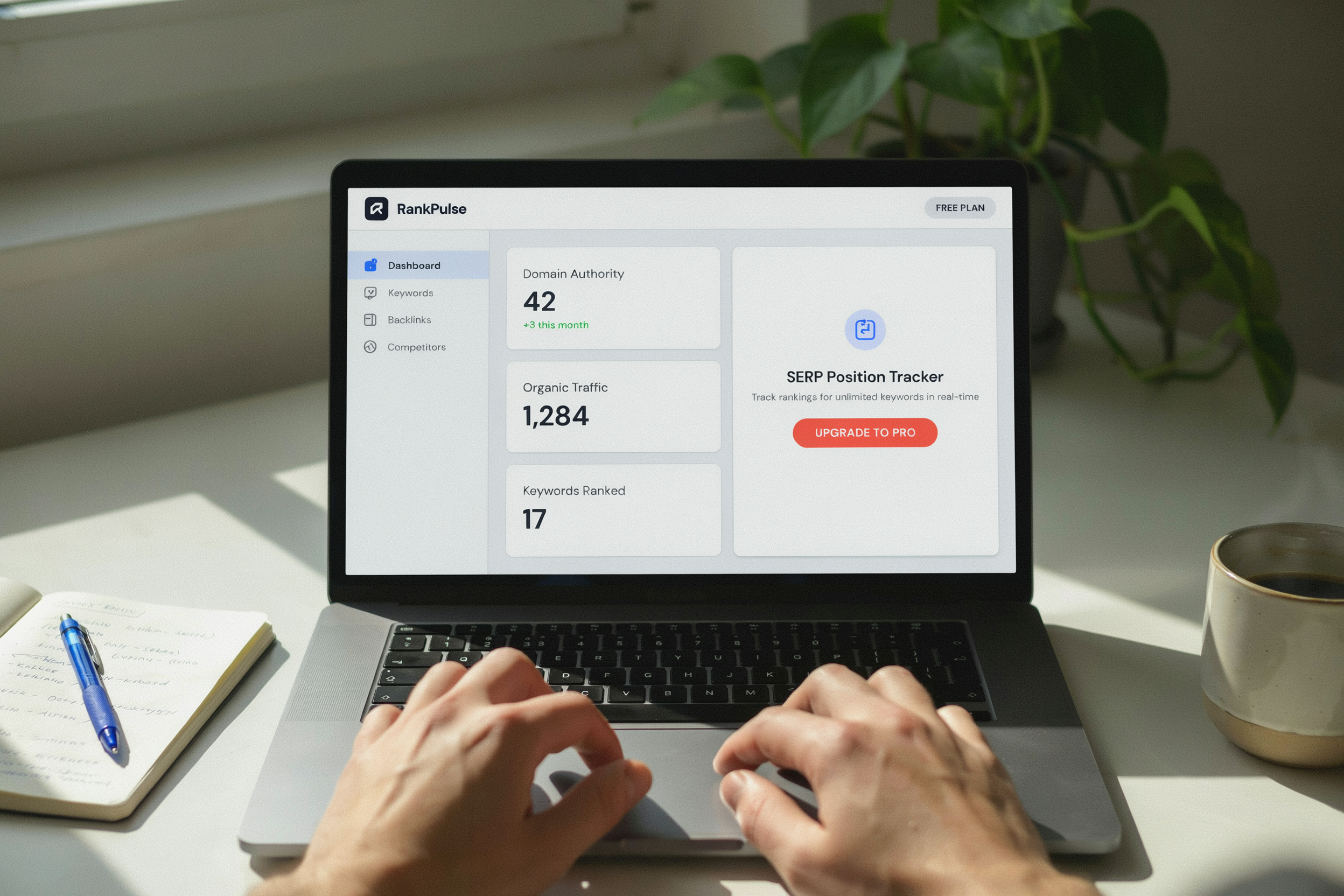
Free SEO tools give you a solid starting point for basic diagnostics. They can crawl a limited number of pages, flag missing meta descriptions, and show you which keywords drive a trickle of traffic. Many also offer a glimpse into backlink profiles, though the data is often sampled rather than exhaustive. For a small site with a handful of pages, this level of insight can be enough to spot obvious issues like broken links or duplicate title tags.
However, platforms like serfix quickly reveal the free tier's boundaries. The most common free seo tools limitations include capped crawl budgets, delayed data refreshes, and stripped-down reporting that omits competitive benchmarks. You might see that a page is missing an H1, but you won't learn how your content stacks up against the top-ranking result for that query. Rank tracking in free tools often updates weekly instead of daily, leaving you blind to sudden shifts after an algorithm update.
Another gap is integration. Free tools rarely connect with Google Search Console or analytics platforms in a meaningful way, forcing you to juggle multiple dashboards. They also tend to lock advanced features like log file analysis, JavaScript rendering audits, and custom extraction behind a paywall. The result is a toolset that helps you fix surface-level errors but struggles to guide strategic decisions about content gaps, user intent, or technical debt that accumulates as a site grows. Recognizing these boundaries is the first step toward understanding when an upgrade becomes necessary.
The Real Cost of Free: Hidden Trade-offs

While free SEO tools eliminate the upfront expense, they often introduce hidden costs that can undermine your search performance. One of the most significant trade-offs is data accuracy. Free tools typically rely on sampled or aggregated data rather than real-time, granular metrics. For example, a free rank tracker might update positions weekly instead of daily, causing you to miss critical ranking fluctuations that signal algorithm updates or competitor moves. Similarly, keyword volume estimates in free versions are often rounded or drawn from smaller data sets, leading to decisions based on incomplete intelligence.
Feature depth is another area where free tools fall short. Most free tiers cap the number of tracked keywords, backlink analyses, or site audits you can run. This forces you to prioritize which aspects of your SEO you can monitor, leaving blind spots that paid tools would cover comprehensively. Support is virtually nonexistent in free plans; you're limited to community forums or outdated documentation, which can delay troubleshooting when a technical issue impacts your site's visibility.
Scalability is perhaps the most critical hidden cost. As your site grows, free tools quickly become bottlenecks. A free site audit tool might crawl only 500 pages, while your e-commerce store has 10,000 product URLs. The time spent manually stitching together data from multiple free tools, or the opportunity cost of missed insights, can far outweigh the price of a paid subscription. When evaluating serfix solutions, consider these hidden trade-offs as part of the total cost of ownership.
When Free Tools Are Enough
Free SEO tools are enough for website owners who are just starting out or managing a single, small site. If you run a personal blog, a local business with a handful of pages, or a niche hobby site, free tools can cover the basics without overwhelming you. For example, Google Search Console and Google Analytics provide essential data on search performance, traffic, and indexing issues at no cost. These tools help you monitor keyword rankings, identify crawl errors, and understand user behavior, which is often all you need when your site is simple and your goals are modest.
Freelancers and small agencies testing the waters can also rely on free tools while building their client base. A tool like serfix offers a free tier that includes core audits and rank tracking, making it a practical starting point. In these scenarios, the limitations of free tools, such as restricted crawl depth or limited historical data, rarely hinder progress because the scope of work is small. You can manually supplement with spreadsheets for tracking and still deliver value to clients.
Another scenario where free tools are sufficient is when you're learning SEO. Beginners don't need enterprise-level features; they need to understand fundamentals like keyword research, on-page optimization, and link building. Free tools provide a sandbox to experiment without financial risk. Once you outgrow the basics, say, when you need to audit hundreds of pages or track competitors at scale, that's the signal to consider upgrading.
Paid SEO Software Benefits: What You Gain by Upgrading
Upgrading to a paid SEO platform transforms your workflow from guesswork to precision. The core paid seo software benefits revolve around depth, accuracy, and automation. Instead of surface-level metrics, you get granular data on keyword difficulty, search volume trends, and competitor content gaps. This data lets you prioritize tasks that move the needle, rather than chasing vanity metrics.
A major advantage is technical SEO auditing at scale. Free tools might crawl a handful of pages, but paid solutions like serfix can scan entire sites, flagging issues like broken links, duplicate content, and slow load times across thousands of URLs. This comprehensive view is essential for large sites or agencies managing multiple clients. It turns a tedious manual process into an automated, scheduled task, freeing up hours each week.
Another critical benefit is competitive intelligence. Paid tools reveal your rivals' top-performing keywords, backlink profiles, and content strategies. You can see exactly which pages drive their traffic and reverse-engineer their success. This insight is rarely available in free versions, which often limit competitor analysis to a few domains or hide the most valuable data behind a paywall.
When you consider the time saved and the revenue potential from higher rankings, the seo investment in a paid tool often pays for itself quickly. For example, identifying and fixing a single critical technical flaw can recover traffic worth thousands in monthly revenue. Paid tools also offer reliable support and regular updates, ensuring you stay ahead of algorithm changes without constant manual research.
SEO Tool Pricing: Understanding the Investment
When evaluating free vs paid seo tools, pricing is often the deciding factor, but the landscape is far from simple. Platforms like serfix typically follow a tiered model that scales with features, data volume, and user seats. At the entry level, free tools offer basic functionality like limited keyword research, on-page audits, and backlink snapshots. These are ideal for learning or very small projects, but they rarely provide the depth needed for competitive analysis. As you move into paid tiers, starting around $20 to $50 per month, you unlock more comprehensive data, historical tracking, and advanced reporting. Mid-range plans, often between $100 and $300 monthly, add capabilities like API access, white-label reports, and multi-user collaboration. Enterprise solutions can exceed $500 per month and include custom integrations, dedicated support, and massive data allowances. The key is to map your seo tool pricing to your specific goals: a local business may thrive on a $30 plan, while an agency managing dozens of clients will need a higher tier to maintain efficiency and deliver results. Remember that the cost should be viewed against the potential return, as even a modest improvement in organic traffic can justify a significant investment in the right toolset.
serfix Free vs Pro: A Case Study in Tool Tiers
To make the serfix discussion concrete, consider serfix, an SEO audit platform that offers both a free tier and a Pro subscription. The free version provides a solid entry point: it crawls up to 500 URLs, flags critical technical issues like broken links and missing meta tags, and generates a basic site health score. For a small blog or a local business site, that's often enough to catch glaring problems. But when you need to scale or diagnose deeper performance bottlenecks, the limitations become clear.
The Pro tier lifts those caps and adds capabilities that directly impact rankings. You get unlimited crawls, JavaScript rendering for single-page applications, and integration with Google Search Console and Analytics for blended data views. More importantly, Pro includes historical trend tracking, so you can see whether your Core Web Vitals are improving month over month, and prioritized fix lists that sort issues by estimated SEO impact. These features move the tool from a simple bug finder to a strategic asset.
Pricing for serfix Pro starts at $49 per month for a single site, with agency plans scaling up to handle dozens of properties. That puts it in the mid-range of seo tool pricing, but the jump in functionality is significant. For an SEO professional managing client campaigns, the ability to white-label reports and schedule automated crawls saves hours each week. The free version is a capable diagnostic tool, but the Pro tier turns serfix into a system for continuous improvement, which is where the real seo investment pays off.
Building Your SEO Toolkit: A Strategic Approach
Assembling a cost-effective toolkit means matching each tool to a specific need, not just grabbing the most popular names. Start by auditing your current workflow: list the tasks you perform weekly, from keyword research to rank tracking and technical audits. Identify which of those tasks are adequately handled by free tools and which create bottlenecks or data gaps. A common pattern is to use free tools for initial research and ongoing monitoring, then layer in paid solutions for deeper analysis and competitive insights.
For example, a small agency might rely on Google Search Console for performance data and a free backlink checker for basic link profiles, but invest in a paid rank tracker when client reporting demands daily accuracy. The goal is to avoid duplication: paying for two tools that cover the same function wastes budget. Instead, treat your toolkit as a stack where each layer serves a distinct purpose. Many teams find that a single comprehensive platform, like serfix, can replace several point solutions, simplifying the stack and reducing total cost.
When evaluating any tool, consider scalability. A free tool that works for a five-page site may collapse under a 50,000-page enterprise domain. Plan for growth by choosing tools with tiered pricing that let you upgrade without migrating data. Also factor in training time: a complex paid tool that your team never fully adopts is a poor investment. The best toolkit is the one your team uses consistently, combining the agility of free tools with the power of paid software where it matters most.
Common Mistakes When Choosing SEO Tools
One of the most frequent errors in the free vs paid seo tools decision is overbuying features you'll never use. A small business with a five-page site doesn't need enterprise-grade log-file analysis or multi-location rank tracking. Paying for unused capabilities inflates your seo tool pricing without adding value, so start with a clear list of must-have functions and match the tool to that list.
Another common misstep is ignoring data integration. Even the best paid seo software benefits are wasted if the tool can't share data with your analytics, CRM, or content management system. Before committing, verify that the tool offers API access or native connectors for your stack. Siloed data leads to fragmented insights and extra manual work.
Underestimating the learning curve is also a trap. Some platforms require weeks of training before your team can use them effectively. Factor in onboarding time when comparing free vs paid seo tools because a steep learning curve can delay ROI. Finally, don't assume that a higher price always means better support or accuracy. Test the tool with a trial account, read independent reviews, and evaluate the quality of customer support before making a long-term commitment.
Measuring ROI on Your SEO Tool Investment
Calculating the return on serfix investments begins with tracking organic traffic and conversions before and after adoption. Set a baseline using at least three months of historical data from Google Search Console and your analytics platform. After implementing a paid tool, monitor the same metrics monthly to isolate the tool's impact from seasonal trends or algorithm updates.
Beyond traffic, tie organic performance to revenue by assigning a value to each conversion event. For lead-generation sites, this means tracking form submissions and phone calls. For ecommerce, use enhanced ecommerce tracking to attribute transaction revenue to organic landing pages. A paid tool that surfaces high-opportunity keywords and technical fixes should show a measurable lift in these conversion metrics within two to three months.
Factor in time savings as a hard cost. If a paid tool automates rank tracking, backlink monitoring, and technical audits, calculate the hours your team would spend on manual alternatives. Multiply that by your average hourly rate to quantify the labor cost avoided. Many agencies find that a single comprehensive platform replaces three to five point solutions, reducing both subscription costs and the cognitive overhead of switching between dashboards.
Finally, benchmark your tool's performance against industry standards. Compare your organic growth rate, keyword rankings, and conversion rates to published benchmarks for your vertical. If your paid tool consistently helps you outperform the median, the investment is justified. Re-evaluate every quarter to ensure the tool adapts to your evolving strategy and continues to deliver a positive return.
Frequently Asked Questions
When should I upgrade from free to paid SEO tools?
You should upgrade when free tools no longer provide the depth of data or automation your strategy requires. If you're spending hours manually compiling reports, missing critical rank-tracking data, or unable to analyze competitors effectively, a paid tool can save time and uncover opportunities that free versions hide. For many professionals, the tipping point is when SEO becomes a primary revenue driver rather than a side experiment.
Are free SEO tools accurate enough for professional use?
Free tools can be accurate for basic tasks like on-page analysis or backlink counts, but they often rely on limited data sets and infrequent updates. For decisions involving large budgets or competitive keywords, paid tools offer more precise, real-time data and historical trends. Relying solely on free tools for client reporting or high-stakes campaigns can lead to blind spots that cost more than a subscription would.
What is the most important feature to look for in a paid SEO tool?
The most important feature is comprehensive, reliable data that aligns with your goals. For most users, this means accurate rank tracking across devices and locations, in-depth competitor analysis, and actionable site audit capabilities. A tool that integrates with your existing workflow and scales with your needs, such as serfix, can provide a strong foundation without overwhelming you with unnecessary features.
Can I mix free and paid SEO tools effectively?
Yes, a hybrid approach often works best. Use free tools for quick checks, basic keyword research, or monitoring a small set of pages, and invest in paid tools for mission-critical tasks like technical audits, large-scale rank tracking, and competitive intelligence. This strategy keeps costs down while ensuring you have professional-grade insights where they matter most.